
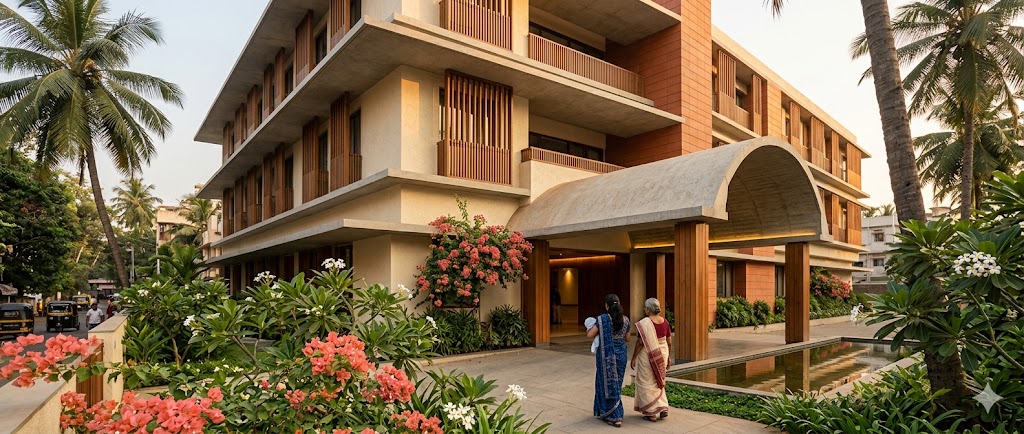
Maternity & Women's Hospital Design in India
An Architect's Working Reference — LDR/LDRP Models, Obstetric & Neonatal Adjacencies, MTP Act & PC-PNDT Compliance, Postpartum Ward Typology, LaQshya & MusQan Quality Frameworks, State CEA Labour-Room Schedules, and the Women's-Health Service Stack
Maternity is the typology of Indian healthcare architecture in which the spatial brief most directly reflects the cultural moment. A maternity hospital designed to a 1990s brief — cohort labour rooms with three or four beds, a separate sterile delivery room, and a multi-bed postpartum ward — meets the regulatory minimum for most Indian states even today. A maternity hospital designed to a 2026 brief — single LDR rooms with concealed clinical apparatus, a partner-witnessed C-section in the obstetric OT, the newborn placed on the mother's chest within sixty seconds of birth, the entire postpartum stay in one room with the family attendant accommodated on a convertible day-bed — meets a different brief: that of respectful maternity care, of bonded postpartum recovery, of a birthing experience that women remember with dignity rather than tolerate as ordeal. The two buildings can both be called "maternity hospitals" and both pass the same state Clinical Establishments Act registration. They are not the same building.
This guide is a facility-type deep-dive in the Studio Matrx healthcare architecture series. It assumes the reader has read the pillar regulatory reference, the hospital design roadmap, and is familiar with NBC 2016 Group C-1, the Bio-Medical Waste Rules, and AERB requirements as they apply to the general hospital. Here we focus on what is specific to women's hospitals and maternity facilities — the women-and-child quality programmes that the Indian government runs (LaQshya, MusQan, MAA, SUMAN), the birthing-room paradigm choices that drive the entire labour-suite plan, the obstetric-neonatal lifeline that no other typology requires, the unique regulatory architecture of the MTP Act and the PC-PNDT Act, the gynae-oncology overlay that converts a maternity hospital into a women's hospital, and the failure modes that recur across Indian maternity projects.
The position this guide takes is specific: maternity is not a sub-set of general hospital design. It is its own typology with its own clinical processes, its own regulatory stack, its own room schedules, and — increasingly — its own cultural brief. The architect who designs a women's hospital with the mental model of a general hospital produces a building that the obstetrician will use efficiently and the patient will leave dissatisfied. The architect who designs to the women's-health brief produces a building that does both.
"The midwife considers the labouring woman not as a patient, but as a person passing through one of the great events of her life. The room must do the same." — Sheila Kitzinger (1929–2015), birth scholar, paraphrased from Birth at Home (Kitzinger, 1979)
"India's maternity buildings have for too long been built for the obstetrician's convenience, not for the labouring woman's experience. The architecture of dignified birth is overdue." — Dr. Hema Divakar (b. 1960), gynaecologist and former president of FOGSI, paraphrased from a 2018 keynote
1. Why Maternity is its Own Typology
A general hospital admits a sick patient who hopes to leave well. A maternity hospital admits a well person who comes to give birth. The clinical posture is inverted, and the spatial implications follow.
Six characteristics make maternity distinct from general inpatient typology:
- The patient is not sick. A labouring woman in a normal pregnancy is medically well. The room must therefore not feel like a sick-room. Clinical apparatus must be present and instantly accessible but visually subordinate. The default reading of the space must be that of a private suite, not of a hospital ward.
- The patient brings a partner / family attendant. Indian families typically attend a labouring woman in numbers — mother, mother-in-law, husband, sometimes sisters. The room and the antenatal waiting area must accommodate this without compromising clinical work. Family separation at the labour-room door is a common cultural failure point.
- There are two patients at the moment of birth. The mother and the newborn arrive in the room as one and leave it as two. A separate clinical workstation, a warmer, paediatric services, and resuscitation capacity must be present without crowding the room.
- The clinical timeline is variable but bounded. Labour can last 4 hours or 36 hours. The room must support a long stay without becoming claustrophobic, and a short stay without feeling under-used. Daylight, view, ambient noise control, and soft light scenes for the second stage of labour are not luxuries — they are part of the clinical brief.
- The neonatal lifeline is non-negotiable. A newborn in distress must reach the NICU within 60 seconds. This is not a recommendation; it is a clinical-outcome variable. The architecture must guarantee it.
- The cultural significance of the event is high. A birth is remembered for a lifetime. The building's hospitality — the corridor on which the family waited, the room in which the woman laboured, the lift that delivered the newborn home — becomes part of the family memory. This is true of no other building type except perhaps the wedding venue.
The composite effect is that a women's hospital is a hybrid building: part inpatient hospital, part hospitality, part day-care centre, part outpatient clinic, with a critical-care core and an obstetric-surgical suite. No single building-type analogue exists.

2. The MoHFW Quality Stack — LaQshya, MusQan, MAA, SUMAN, and the IPHS Apex
India's Ministry of Health and Family Welfare runs a stack of quality programmes specific to maternity and child health. Each programme adds spatial requirements that overlay the basic regulatory architecture.

| Programme | Year | Scope | Architectural Implication |
|---|---|---|---|
| LaQshya (Labour Room Quality Improvement Initiative) | 2017 | Labour rooms, maternity OTs, obstetric HDU/ICU at all govt facilities ≥ 100 deliveries/month | Defined labour-room layout: pre-labour bay, labour bay, partograph station, eclampsia corner, PPH-management area, baby-resuscitation alcove, sluice room, separate clean/soiled flow |
| MusQan (Child-Friendly Hospital Initiative) | 2021 | Paediatric OPD, ward, NICU, SNCU, immunisation OPD | Child-friendly aesthetic, kangaroo-mother-care (KMC) area in NICU/SNCU, parent rooming-in, breastfeeding rooms, bright walls, low-height furniture |
| MAA (Mothers' Absolute Affection) | 2016 | Breastfeeding promotion at all delivery points | Lactation rooms in OPD and IPD, breastfeeding-supportive postpartum room layout |
| SUMAN (Surakshit Matritva Aashwasan) | 2019 | Free-of-cost service guarantee at all govt facilities | Counselling rooms, complaint-redressal interface, dignified labour spaces, zero-tolerance signage |
| IPHS 2022 — Maternity-Specific Schedules | 2022 | Mandatory for govt PHC, CHC, SDH, DH | Bed numbers by tier (PHC: 2-bed labour, 4 maternity beds; CHC: 6-bed labour, 30 maternity; DH: 20-bed labour, 100+ maternity) plus equipment list |
| NABH 5th Edition — Maternity Chapter | 2020 | All NABH-accredited facilities providing maternity | Specific standards for labour room, OT, postpartum ward; partograph evidence; respectful maternity care (RMC) audit |
A government maternity facility is bound by all six layers. A private maternity facility is bound by NABH (if accredited) and the state CEA only — but increasingly is contractually bound by LaQshya-equivalent standards through CGHS / ECHS / state insurance empanelment, by MusQan / KMC standards through paediatric empanelment, and by MAA standards through informal social audit (parents publish on social media if a facility's lactation support is poor).
The architect's read: design to the union of the relevant programmes from concept stage. Adding a KMC area to an existing NICU after construction costs three times what it costs to design in. Adding a counselling room to a postpartum ward after registration is often impossible without taking a bed offline.
"The labour room is the single most consequential room in the Indian public health system. Get it right, and maternal mortality falls. Get it wrong, and women die — preventably, predictably, in numbers we no longer accept." — Dr. Soumya Swaminathan (b. 1959), former Chief Scientist, World Health Organization, paraphrased from a 2019 LaQshya orientation
3. The Service-Mix Decision — Four Maternity Typologies
Before architectural work begins, the brief must declare which typology the facility is. The four are functionally distinct and produce different buildings. A brief that says "maternity hospital" without naming the typology is incomplete.
| Typology | Bed Strength | Clinical Scope | Typical Indian Context | Architectural Footprint Indication |
|---|---|---|---|---|
| Birth Centre | 0–6 maternity beds | Normal vaginal delivery only; midwife-led; transfer protocol for complications | Rare in India; emerging in metros (Bengaluru, Pune, Mumbai); Fernandez Hospital model influence | 200–400 m² standalone; LDR-led; minimal surgical capacity |
| Maternity Home | 10–30 beds | Vaginal + LSCS; basic NICU bay (Level I); referral for high-risk | Most common Indian private model; doctor-promoter ownership; ground + 2 floor format | 800–2,000 m² typically |
| Women & Child Hospital | 30–150 beds | Full obstetric, neonatal NICU Level II/III, paediatrics, gynae, fertility, breast clinic | Mid-tier private, govt district hospital women's wing, semi-corporate | 4,000–15,000 m² |
| Multi-Specialty with Women's Wing | 100+ beds, women's wing 30–60 | Above + gynae-oncology, foetal medicine, urogynae, advanced fertility, MFM, level III NICU | Tertiary corporate hospitals (Apollo, Fortis, Manipal, etc.); academic medical centres | Wing of 6,000–20,000 m² within a 50,000+ m² hospital |
The decision drivers:
- Catchment population — a birth centre needs 30+ deliveries / month to be viable; a 100-bed women's hospital needs 200+; a tertiary wing needs 400+.
- Clinical risk profile — referral-zone hospitals must be tertiary or have a transfer relationship with a tertiary; standalone birth centres are only safe in metros with reliable transfer time.
- Insurance and empanelment plan — CGHS, ECHS, state government schemes, and most corporate insurance now expect at least Level II NICU and 24×7 obstetric OT availability; this rules out birth centres for empanelled work.
- Cultural positioning — birth centres and high-end maternity homes appeal to woman-centred-care brief; women & child hospitals appeal to "everything under one roof" brief; tertiary wings appeal to high-risk and complex referral.
The architect's first contribution is to refuse the brief if the catchment, the empanelment plan, and the cultural positioning are inconsistent. A tertiary-positioned 30-bed maternity home in a tier-3 town will fail commercially within 18 months of opening; the architecture cannot rescue a misaligned market position.
4. Departmental Adjacencies — The Obstetric-Neonatal Lifeline
The functional adjacency model for a women's hospital differs from a general hospital in one decisive way: the obstetric OT and the NICU must be on the same floor and within 60 seconds of stretcher transit. This single constraint shapes the entire vertical and horizontal organisation.

Required adjacencies (in priority order):
1. Obstetric OT ↔ NICU — same floor; sterile corridor; 60-second target. The clinically gold standard is OT and NICU sharing a wall, with a dedicated transfer hatch for the newborn.
2. Labour Room (or LDR) ↔ Obstetric OT — same floor; 90-second target for emergency LSCS conversion. Mid-cavity instrumental delivery may require OT escalation in 5–10 minutes.
3. OB Triage ↔ Labour Room — same floor or one floor up by stretcher lift; 5-minute target. Triage is the obstetric ED — it sees ruptured membranes, antepartum haemorrhage, eclampsia, and labour pains, all requiring rapid sorting.
4. Postpartum Ward ↔ NICU — same building; 3-minute target by lift. Mothers visit the NICU multiple times per day during their stay; the route must not pass through public lobbies.
5. Labour Room ↔ Blood Bank — vertical or horizontal; 5-minute target for PPH (post-partum haemorrhage) blood release. Blood is needed in 30% of complicated deliveries; PPH is the leading cause of maternal mortality in India and the architect can save lives by reducing the blood-bank-to-LR transit time.
6. Antenatal OPD ↔ USG (PNDT) ↔ Foetal Medicine — same floor preferred; outpatient flow.
7. NICU ↔ Paediatric Ward — same floor or adjacent floor; for graduates of the NICU.
Permitted separations:
- Antenatal OPD can be on a different floor from labour & delivery (most common arrangement: OPD on ground, L&D on first or second).
- Wellness OPD (mammography, colposcopy, bone density, breast clinic) can be in a separate wing — the patient population is largely non-obstetric.
- Gynae-oncology day-care can be on a separate floor — it integrates with the multi-specialty oncology service.
- Pharmacy and CSSD can be on lower floors with vertical service connection.
The vertical organisation pattern that works:
| Floor | Function |
|---|---|
| Basement | Parking, MEP plant, BMW holding, mortuary access, CSSD soiled return |
| Ground | Antenatal OPD, USG, Wellness OPD (mammography, colposcopy), Pharmacy, Patient Lounge, Café, separate Ambulance Bay |
| First | Triage, Labour & Delivery, Obstetric OT, Recovery, NICU — the critical-care floor; entirely staff-controlled access |
| Second | Postpartum Ward (single rooms preferred), Paediatric Ward, Lactation Room, Family Lounge |
| Third | Gynae OT, Day-Care Surgery (hysteroscopy, IVF retrieval/ET), Foetal Medicine |
| Fourth+ | Fertility / IVF, Wellness Programs, Administrative, Doctor's Lounge |
Variations exist (the labour suite on second floor with NICU above is also common), but the adjacency rules above are not negotiable. A women's hospital that breaks the OT-NICU adjacency rule will fail clinical-outcome audits and, in a litigation-exposed environment, fail commercially.
5. The Birthing-Room Paradigm — Traditional / LDR / LDRP
The most consequential design decision in a women's hospital is the birthing-room paradigm. Three configurations are in use globally; all three exist in India in varying proportions.

Traditional (LR + DR + Postpartum) — the labouring woman moves through three rooms: the labour room (cohort, 4–6 beds, where she labours through first stage), the delivery room (sterile, where she gives birth in second stage), and the postpartum ward (cohort, where she recovers). This is the design implicit in most state CEA schedules and is the dominant Indian model — virtually all government facilities and most private mid-tier facilities use this. Three transfers are involved; infection load is highest; privacy is lowest; but per-bed capital cost is also lowest.
LDR (Labour-Delivery-Recovery) — a single room in which the woman labours, delivers, and recovers for the first 1–2 hours postpartum. Then she is transferred to the postpartum ward. One transfer. The LDR room is larger (typically 22–28 m²) than a traditional labour-room bed (8–10 m² per bed in cohort). This is the dominant model in tertiary private hospitals in metros and is the configuration most aligned with respectful maternity care principles.
LDRP (Labour-Delivery-Recovery-Postpartum) — a single room for the entire stay. Zero transfers. The room is larger still (typically 28–35 m²) and includes a family sleeping area, full ensuite, lactation chair, and newborn cot. Highest capital cost; lowest patient flow disruption; longest length of stay per room (36–48 hours typical). Used in luxury / NRI-targeted private hospitals; rare in India outside metros.
The trade-off matrix:
| Criterion | Traditional | LDR | LDRP |
|---|---|---|---|
| Room area per delivery (m²) | 8–10 (LR) + 16–20 (DR shared) + 6–8 (PP) | 22–28 (LDR) + 6–8 (PP) | 28–35 (LDRP only) |
| Transfers during stay | 3 (LR → DR → PP → discharge) | 1 (LDR → PP → discharge) | 0 (LDRP → discharge) |
| Privacy | Low | High | Highest |
| Family accommodation | Limited; often denied at LR door | Full; in the room | Full; sleeping accommodation |
| Infection control complexity | High (3 spaces × 2–3 patient turns/day) | Moderate (1 LDR + PP transfer) | Lowest (1 space, no transfer) |
| Per-room capital cost (indicative) | ₹8–14 L | ₹18–28 L | ₹28–45 L |
| Throughput per room/month | 30–60 (cohort LR) | 8–12 (LDR) | 4–6 (LDRP) |
| Indian uptake (2026 estimate) | ~78% | ~18% | ~4% |
| Cultural fit (Indian context) | Familiar; staff trained for it | Increasingly preferred by urban patients | Niche; "premium birth" positioning |
The architect's read: the choice of paradigm is not a design preference; it is a programmatic decision driven by catchment positioning, fee structure, and clinical philosophy. A 100-bed urban tertiary women's hospital aiming at corporate empanelment and middle-class catchment is best designed with 60% LDR + 40% traditional cohort backup (for high-throughput moments). A 30-bed maternity home in a tier-2 town aiming at the same patient profile is best designed all-traditional. A 20-bed luxury maternity home in South Mumbai or Gurugram targeting the international community is best designed all-LDRP.
The mistake most commonly seen: an LDR brief followed through to construction without budget for the 22–28 m² room footprint, resulting in 14–16 m² LDR rooms that are functionally inadequate. Either commit to LDR with the area, or stay with traditional. The hybrid 16 m² "LDR" pleases no one.
6. The LDR Room — Schedule of Accommodation
The LDR room is the single most architecturally consequential room in a modern women's hospital. The room's programme has expanded over four decades from a Western feminist-health-movement insistence on dignity, through evidence-based-design research showing reduced caesarean rates and improved Apgar scores, to the contemporary Indian tertiary-private brief where the LDR room is also a marketing instrument.


Recommended schedule (24 m² benchmark):
| Element | Specification | Notes |
|---|---|---|
| Room area (clear) | 22–28 m² | 24 m² is the working benchmark; ≥ 28 m² preferred for plus-size patients |
| Room shape | Square or short-rectangle (4.5–5.0 × 4.5–5.0 m) | Long-narrow rooms force linear furniture and lose family zone |
| Clear ceiling height | 3.0–3.5 m | 3.0 m minimum; 3.5 m allows ceiling-mounted services if needed |
| Floor finish | Sheet vinyl (welded seams) or epoxy | NABH: monolithic, non-porous, coved skirting |
| Wall finish | PU-painted gypsum board, hospital-grade washable | Soft warm tone preferred over clinical white |
| Birthing bed | Convertible (3-section, electric); stirrups concealable | NEN-EN 60601-2-38 or equivalent |
| Headwall services | O₂ × 2, N₂O, vacuum × 2, air, suction, nurse-call, monitor data port — concealed in PU-finished panel | 800 mm wide service rail typical |
| Infant warmer | Wall-niched alcove or movable; 70 cm clear in front | Adjacent to clinical headwall; not in family zone |
| Concealable clinical curtain | Retractable curtain or sliding panel | Default state: hidden; deployed in second stage |
| Family zone | Recliner chair, side table, charging point, coat-hook | Day-bed convertible if LDRP-leaning |
| Ensuite | WC + shower + grab-bars; min 4–5 m²; door min 900 mm | Sitz-bath capability for postpartum |
| Daylight | External wall preferred; window sill ≤ 750 mm for view from bed | NABH evidence-based design: daylight reduces analgesia request |
| Artificial lighting | Three-scene: ambient (300 lux), examination (1000 lux), procedure (2000 lux) | Dimmable; warm CCT 3000K for ambient |
| Acoustic isolation | STC ≥ 50 between LDR rooms; STC ≥ 45 to corridor | Labour vocalisation can be loud; privacy is essential |
| Documentation counter | Sink + computer station + paper documentation | Concealed from patient sightline |
| Storage | Drawer cabinet for sterile linen, personal items, baby supplies | 0.6–1.0 m linear |
| Resuscitation provision | Code-blue button at headwall; access to crash cart from corridor in < 30 sec | Crash cart in corridor alcove, not in room |
| Air change rate | 6–10 ACH; positive pressure to corridor (LaQshya) | ASHRAE 170 compliance |
| Temperature control | 22–24°C; humidity 30–60% RH | Newborn thermoregulation post-birth |
| Music / ambient sound | Bluetooth speaker option | Increasingly part of birth plan |
| Door | 1.2 m clear width (stretcher passage); single leaf; observation window with privacy blind | Required for emergency stretcher exit to OT |
Indian-context specifics:
- Female attendant accommodation in the room — Indian families typically have a female elder (mother, mother-in-law, sister) present throughout labour. Provide a recliner and a side chair. The "single birth partner" Western LDR brief does not match Indian cultural expectation.
- Hindu / Muslim / Christian birth ritual provision — some families want to perform a brief ceremony with the newborn. Allow for it without separate space — a clear floor area of 1 × 1 m near the warmer is sufficient.
- Religious music option — a Bluetooth speaker that the family can pair to is more useful than a built-in audio system.
- Hot food service — Indian postpartum tradition includes specific foods (jaggery, ghee, gondh, methi) brought from home. The family zone should have a side table that can hold a tiffin and a thermos.
- Modesty and exposure control — labour involves repeated cervical examinations. The bed orientation, the door's privacy blind, and the curtain track must work together so that no one outside the room sees the patient at any examination moment.
"In the labour room we have spent fifty years making it easier for the doctor and harder for the woman. The LDR room is the first design that finally inverts this — and at almost no cost in clinical efficiency." — Dr. Krishna Bhattacharyya (1928–2010), obstetrician and women's-health pioneer, paraphrased from a 2002 interview
7. Obstetric OT — Distinct from a General OT
An obstetric OT is not a general OT with an obstetric label. It has a different procedure profile, different equipment, different staffing, and different design optima.


Differences from general OT:
| Parameter | General OT | Obstetric OT |
|---|---|---|
| Primary procedure | Major surgery, varied | LSCS (caesarean) — predictable, 30–45 min |
| Procedure rate | 2–4 cases / day typical | 4–10 cases / day in busy unit |
| Patients in room | 1 | 2 (mother + newborn) at moment of delivery |
| Rapid-conversion need | Rare | Frequent (LDR → OT in < 15 min for emergency LSCS) |
| Anaesthesia type | Mostly general | Mostly regional (spinal/epidural); GA only for emergencies |
| Baby resuscitation provision | None | Mandatory — alcove or adjacent room |
| Partner-in-OT (Indian context) | Never | Increasingly requested — needs space and protocol |
| Visual clinical exposure | Surgeon-focused | Mother + newborn; mother awake under regional |
| Post-procedure flow | Recovery → ward | Mother → recovery → postpartum; baby → mother (skin-to-skin) or NICU |
Schedule of accommodation:
| Element | Specification |
|---|---|
| OT area (clear) | 25–30 m² (vs 18–22 m² for general minor OT) |
| Clear ceiling height | 3.6 m (allows HEPA terminal modules) |
| OT classification | Grade B (Class 100 / ISO 7) for elective; Grade A for high-risk |
| HVAC | 25 ACH min; positive pressure +12.5 Pa to corridor; HEPA filtration |
| Anaesthesia bay | Adjacent; for regional block before transfer to table |
| Baby resuscitation alcove | Min 4 m² niched into OT or directly adjacent; warmer + CPAP + suction |
| Sterile corridor connection | Direct; sterile pack delivery from CSSD via clean lift |
| Corridor width to LDR | 2.4 m minimum (two stretchers crossable) |
| Recovery bay count | 1 bed per 2 OTs; plus 1 high-dependency bay for haemorrhage cases |
| NICU connection | Sterile corridor; ≤ 60 second stretcher transit |
| Partner waiting / observation | Window or vestibule from sterile corridor; not in OT |
| Supplementary equipment | Cell salvage (Cell Saver), rapid infuser, blood warmer, B-Lynch suture kit |
The 60-second OT-to-NICU rule. A neonate born by emergency caesarean for foetal distress may need NICU-level resuscitation within a minute of birth. The architecture is the difference. A direct sterile corridor with a swing door, no level changes, no intermediate doors, and a clear path of sight from the OT-end to the NICU-end is the working configuration. Architects who route this corridor through a service corridor or who require the stretcher to enter a public corridor should expect a clinical incident within the first year of operations.
8. NICU Integration — The Newborn Critical Care Lifeline
A maternity hospital's NICU is its single most equipment-dense, infection-sensitive, and parent-impactful space. NICU design is itself a sub-specialty — the focus here is on integration with the obstetric service.
Levels of neonatal care (Indian classification, MoHFW):
| Level | Capability | Equipment | Staffing | Architectural Footprint |
|---|---|---|---|---|
| Level I (Newborn Care Corner / NBCC) | Resuscitation only; in labour room | Warmer, suction, ambu | LR staff trained | 4 m² alcove in LR / OT |
| Level II (SNCU — Sick Newborn Care Unit) | Stabilisation + basic NICU; non-ventilator | Warmers, phototherapy, CPAP, basic monitors | Trained nurses + paediatrician on call | 50–80 m² for 8–12 cots |
| Level III (NICU) | Full NICU; ventilation, surfactant, advanced care | Incubators, ventilators, blood gas, nutrition | Neonatologist, dedicated nurses 1:2 | 4.5 m² per incubator + ancillary |
| Level III Plus | Sub-specialty (cardiac, surgical) | Plus theatre access | Multi-disciplinary | Project-specific |
Architectural principles for NICU:
- 4.5 m² clear per incubator is the NABH / IPHS / MusQan minimum. Working brief: 5–6 m² for clinical comfort.
- 2 m clearance between incubators — for crash-team access during resuscitation.
- No through-traffic — NICU is a destination, not a corridor.
- Single-entry zone with hand-wash + gowning.
- KMC (Kangaroo Mother Care) area — comfortable recliners, screens, dim light; mothers spend 4–12 hours / day here; this is the MusQan signature requirement.
- Parent-room or rooming-in for graduates — for stable infants prior to discharge, mothers stay overnight to learn care.
- Daylight — at least one external wall; circadian rhythm restoration is part of the clinical brief for premature infants.
- Acoustic limit — ≤ 45 dB ambient; alarms are a major contributor; bedside silent-alarm panels reduce ambient noise.
- Pressure cascade — positive to corridor; HEPA-filtered air; 10–12 ACH minimum.
- Service redundancy — two oxygen outlets, two air, two suction per incubator position.
- Direct connection to obstetric OT and LDR via sterile corridor.
The KMC area as the MusQan differentiator. The Kangaroo Mother Care intervention — sustained skin-to-skin contact between mother and newborn — has the best mortality-reduction evidence base of any intervention in neonatal care. The KMC area is therefore a clinical space, not an amenity. Design it with reclining chairs (not standard chairs), curtains (not partitions, which trap air), low warm light, breast-feeding side table, and a foot rest. Eight chairs per 12-cot Level III NICU is a reasonable sizing.
9. Postpartum Ward — Single-Room Rooming-In as the New Baseline
Postpartum ward design has shifted decisively toward single rooms with rooming-in over the last fifteen years. The change is driven by three converging forces: clinical evidence (reduced infection, increased breastfeeding success), MAA and MusQan programme requirements, and patient expectation in the urban Indian middle class.


Single room (recommended baseline):
| Element | Specification |
|---|---|
| Room area | 16–20 m² clear |
| Mother's bed | Adjustable height; side rails; O₂ + suction outlets at headwall |
| Newborn cot | Adjacent to mother's bed; rooming-in (not nursery) |
| Lactation chair | Recliner with foot-rest; positioned near window |
| Family attendant accommodation | Convertible day-bed (1.9 × 0.7 m) for 1 attendant |
| Ensuite | WC + shower + sitz-bath capability; grab-bars |
| Workstation / sink | For nurse documentation and hand-wash |
| Daylight + view | External wall; outdoor view encouraged for postpartum mood |
| Lighting | Three-scene (night, ambient, examination) |
| Storage | Wardrobe + drawer for personal items + baby supplies |
| Acoustics | STC 50 to next room; door with privacy seal |
| Network | Patient education TV, lactation app capability, call-button |
Twin / shared cohort room (for budget-constrained projects):
- Maximum 2 beds; partition curtain between
- 12 m² per bed minimum
- Newborn cots between beds (not opposite)
- Ensuite shared — 1 per 2 beds
- Generally avoided in new construction; common in Indian government and lower-tier private
Cohort ward (3+ beds):
- Permitted by most state CEAs but increasingly outdated
- 9–10 m² per bed (state CEA dependent)
- Single newborn cot per bed; shared family chair
- Common in govt facilities and budget private; not recommended for new construction
Rooming-in protocol — the architectural enabler. Rooming-in is the practice of keeping the newborn in the same room as the mother throughout the postpartum stay (vs traditional "newborn nursery" model). The MAA programme mandates rooming-in for all government facilities. Architecturally, this requires: (a) a stable position for the newborn cot adjacent to the mother (not at the foot of the bed), (b) a lactation chair within 2 m of the cot, (c) a family attendant who can assist (the convertible day-bed), and (d) sufficient circulation around all three for nurse and paediatric examination.
A newborn nursery — separate room with cohort cots and centralised nursing observation — is now a deprecated model and should not be designed in new women's hospitals except as a small "step-down" facility for infants requiring observation but not NICU.

10. State CEA Labour-Room Schedules — The Compliance Matrix
State Clinical Establishments Acts and state Nursing Homes Acts each prescribe minimum areas and infrastructure for labour rooms. These minimums are binding and are checked at registration. Architects working across states must design to the most stringent applicable minimum, not the average.
| Provision | KPME (Karnataka) | TN CEA | Bombay NH (MH) | Delhi NH | WB CEA | Telangana APMCE | Kerala CEA | UP MCEA |
|---|---|---|---|---|---|---|---|---|
| Labour room minimum area | 15 m² | 18 m² | 13.94 m² | 13.94 m² | 15 m² | 14 m² | 18 m² | 15 m² |
| Labour room minimum beds | 2 | 2 | 2 | 2 | 2 | 2 | 2 | 2 |
| Delivery room (separate) | Required | Required | Required | Required | Required | Required | Required | Required |
| Delivery room minimum area | 16 m² | 18 m² | 16 m² | 16 m² | 18 m² | 16 m² | 20 m² | 16 m² |
| Recovery bay required | Yes | Yes | Yes | Optional | Yes | Yes | Yes | Yes |
| Newborn corner mandatory in LR | Yes | Yes | Yes | Yes | Yes | Yes | Yes | Yes |
| Eclampsia bay | Recommended | Required ≥ 50 beds | Recommended | Recommended | Required | Recommended | Required | Recommended |
| Septic LR (separate) | Required ≥ 50 beds | Required ≥ 30 beds | Required ≥ 30 beds | Recommended | Required ≥ 30 beds | Required ≥ 30 beds | Required ≥ 30 beds | Required ≥ 30 beds |
| Postpartum bed area (single) | 9 m² | 10 m² | 9.3 m² | 8.4 m² | 9 m² | 7.4 m² | 9.5 m² | 9 m² |
| Postpartum bed area (twin/per bed) | 7 m² | 8 m² | 7 m² | 7 m² | 7 m² | 6.5 m² | 7 m² | 7 m² |
| Lactation room mandatory | Voluntary | Voluntary | Voluntary | Voluntary | Required | Voluntary | Required | Voluntary |
| OT (Obstetric) min area | 18 m² | 23 m² | 18 m² | 16.7 m² | 20 m² | 18.6 m² | 25 m² | 20 m² |
| MTP centre approval | Separate | Separate | Separate | Separate | Separate | Separate | Separate | Separate |
| LMP (Labour-monitoring partograph) display required | Yes (LaQshya) | Yes | Yes | Yes | Yes (statutory) | Yes | Yes | Yes |
Reading the matrix: Kerala CEA is the most stringent on labour-room and OT areas (18 m² LR, 25 m² OT). Telangana APMCE is the most permissive on postpartum bed area (7.4 m² single). West Bengal CEA imposes the most additional infrastructure requirements (eclampsia bay, lactation room, septic LR — all statutory). A maternity hospital that meets the Telangana minimum but is later relocated to Kerala will fail registration without redesign of postpartum and OT.
Septic labour room. The "septic LR" — a separate labour room for women with infection (chorioamnionitis, suspected HIV/HBV/HCV, septicaemia) — is required by most state acts above 30 beds. It should be located at one end of the labour suite, with negative pressure ventilation and dedicated staff change. In facilities where dedicated negative-pressure isolation is impractical, a single LDR room at the corridor end can be designated as the septic LR with appropriate signage and ventilation switching.
"State minimums are not aspirational — they are the line below which a facility cannot operate. The architect's duty is to know the line and design above it." — Justice Madan B. Lokur (b. 1953), former Supreme Court of India judge, paraphrased from a 2017 healthcare-rights judgement
11. MTP Act, PC-PNDT Act — The Women's Health Regulatory Architecture
Two statutes specific to women's health add architectural requirements that no other typology faces.

11.1 The Medical Termination of Pregnancy Act 1971 (amended 2021)
Any facility offering MTP services must be approved as an MTP Centre by the state government under the MTP Rules. The architectural implications:
| Requirement | Specification |
|---|---|
| MTP procedure room | Dedicated room or scheduled OT slot; min 16 m²; sterile capability |
| Recovery alcove | Minimum 1 bed; 2-hour observation post-procedure; visual + auditory privacy from waiting |
| Counselling room | Required by MTP Act §3 — pre-procedure counselling is statutory |
| Privacy signage | "Confidentiality of patient identity guaranteed" — bilingual; mandatory display under MTP 2021 §5A |
| Approval certificate display | MTP Centre approval certificate + names of approved RMPs (Registered Medical Practitioners) — public-visible at entry |
| Records storage | Locked cabinet for MTP register (Form III, Form C) — 5 years retention; architect provides location |
| Separate access (preferred) | MTP procedure recovery should not exit through general waiting area — privacy concern |
The 2021 amendment expanded MTP eligibility to 24 weeks for specific categories (rape survivors, minors, women with disabilities, foetal abnormalities) and introduced a Medical Board requirement at the State level for late MTP. The Board's deliberation does not require facility space, but the facility must be approved separately to perform second-trimester MTP — only some approved centres are.
11.2 The Pre-conception and Pre-natal Diagnostic Techniques Act 1994
Any facility with an ultrasound machine — antenatal OPD, foetal medicine, IVF, gynae OPD, emergency room — must register the room under PC-PNDT. The architectural implications:
| Requirement | Specification |
|---|---|
| Permanent room location | Each USG machine must be in a permanently identified, registered room. Moving the machine to another room requires re-registration. Architect's contribution: specify USG room locations and do not allow them to be revisited |
| Mandatory display 1 | "Sex determination is a punishable offence under the PC-PNDT Act" — bilingual (English + state language); minimum 60 × 45 cm; placed on entry wall and inside the room |
| Mandatory display 2 | PC-PNDT Form A registration certificate + name and qualification of authorised user — public-visible at entry to the room |
| Form-F register storage | Each pregnant patient scanned must have a Form-F entry filled before scan; secure cabinet at the USG console |
| Physical security | Lockable door (often missed in OPD design) |
| No camera | The room cannot have unauthorised cameras (anti-sex-selection provision) |
| Audit access | Monthly inspection by district CMO — the room and the records must be accessible |
The architectural takeaway. A women's hospital may have 4–8 ultrasound machines distributed across antenatal OPD, foetal medicine, fertility, gynae OPD, and ER. Each must be in a separately registered room, each must display the mandatory signage, and each must have a secure Form-F cabinet. The architect provides the signage strategy drawing as a deliverable to the registration application — without this, the facility cannot lawfully perform any ultrasound. Multi-USG facilities in particular trip on this: a single missing display in one of six rooms invalidates the registration of that room and exposes the facility to ₹50,000 penalty + suspension under PC-PNDT.
"The PC-PNDT Act is an architectural intervention disguised as a clinical regulation. The room is the unit of compliance, and the architect is the de facto compliance officer at the schematic stage." — Ar. Yatin Pandya (b. 1960), Ahmedabad architect and women's-health design advocate, paraphrased from a 2019 conference
12. HVAC, Infection Control, and the Pressure Cascade
A women's hospital's air-handling strategy is more nuanced than a general hospital's because the pressure relationships across LDR, OT, NICU, and postpartum differ from the general inpatient model.
The maternity pressure cascade (cleanest to dirtiest):
| Zone | Pressure relative to corridor | ACH minimum | Filtration |
|---|---|---|---|
| NICU | Positive (+12.5 Pa) | 12 | HEPA terminal |
| Obstetric OT | Positive (+12.5 Pa) | 25 | HEPA terminal at supply |
| Sterile corridor (OT–NICU) | Positive | 10 | HEPA-filtered AHU supply |
| LDR room | Neutral or slightly positive | 6–10 | Bag filter (90%); HEPA optional |
| Postpartum room (single) | Neutral | 6 | Bag filter (90%) |
| Septic LR | Negative | 12 | HEPA exhaust |
| Soiled corridor / sluice | Negative (−2.5 Pa) | 10 | Direct exhaust |
| BMW holding | Negative; cooled to 4°C | Continuous exhaust | Direct exhaust |
Key design rules:
- Door-closure verification — pressure cascade only works if doors are closed. Door-closer compliance is a commissioning item; design door alarms for OT and NICU.
- No common return-air ducting between zones — return air from a postpartum room must not enter the supply for an OT.
- Dedicated AHUs for OT, NICU, and labour suite (not shared with postpartum or OPD).
- 24×7 operation for OT, NICU, sterile corridor — even when not in use, pressure must be maintained to prevent contamination ingress.
- Humidity 30–60% RH in OT and NICU (newborn thermoregulation; staphylococcal control).
- Temperature 22–24°C in OT and NICU; 24–26°C in postpartum and LDR (mother + newborn comfort).
- Smoke compartmentation must align with pressure zones — a smoke compartment that crosses an OT and a public corridor is non-compliant.
The CSSD–OT coordination. Sterile pack delivery to OT is via a dedicated clean lift / dumb-waiter from CSSD, terminating in a sterile holding cabinet inside the sterile corridor. Soiled instrument return is via a dedicated soiled lift to CSSD soiled side. This bidirectional flow must be designed in vertical core layout — afterthought addition is prohibitively expensive.
13. Women's Wellness and Gynae-Oncology Overlay
A modern women's hospital is not only a maternity hospital. The wellness and gynae-oncology overlay converts the building into a comprehensive women's-health centre.

Wellness programme (typical components):
| Service | Room Requirement | Equipment | Notes |
|---|---|---|---|
| Mammography | 12 m² shielded room (AERB Type-2) | Mammography unit | Female technician mandatory; female changing |
| Bone Densitometry (DXA) | 16 m² shielded room (AERB Type-2) | DXA scanner | Lower shielding; same room can be combined with X-ray |
| Colposcopy | 12 m² procedure room | Colposcope | Recovery chair; biopsy capability |
| Hysteroscopy (day-care) | 16 m² day-care procedure room | Hysteroscope, fluid pump | Recovery alcove; 2-hour discharge |
| Pap-smear / HPV clinic | Standard examination room | — | Female nurse mandatory |
| Breast clinic | 12 m² consultation + biopsy | Ultrasound, biopsy needle | Privacy-led; ribbon-cutting wall art removed |
| Menopause / endocrinology | Consultation room | — | Counselling component |
| Pelvic-floor physiotherapy | 16–20 m² studio | Mat, BIO-feedback, dilators | Low-light, music-capable |
| Bone-health / nutrition | Consultation + measurement | DXA shared | Counselling-focused |
Gynae-oncology (in tertiary women's hospitals):
- Dedicated gynae-oncology OT (combined with obstetric OT in smaller facilities)
- Chemotherapy day-care chairs (4–8 chairs typical; integrate with main oncology if multi-spec)
- Brachytherapy room (if cervical cancer service offered) — AERB Type-1 approval; high-dose-rate brachytherapy facility
- Lymphedema therapy room
- Counselling and palliative interface
IVF / fertility (if offered):
- IVF lab (Class 100 air; ICMR / NABH ART standards)
- Embryology lab (clean room; 4–6 m²)
- Egg/embryo retrieval procedure room (mini-OT; 16–20 m²)
- Embryo transfer room (procedure room; 12 m²)
- Counselling room
- Andrology / semen collection room (6–8 m²; private; comfortable)
- Cryopreservation storage (LN2 dewars; ventilation; alarm)
The IVF / fertility service is now ICMR-regulated under the Assisted Reproductive Technology (Regulation) Act 2021 and the Surrogacy (Regulation) Act 2021 — both with their own architectural notes that warrant a separate guide. Architects designing fertility services as part of a women's hospital should treat these as requiring specialist input.
14. Common Failure Modes — Maternity Hospital Specific
A pattern audit of stalled or rejected maternity projects in India reveals the following recurring failures:
| # | Failure Mode | Root Cause | Consequence | Prevention |
|---|---|---|---|---|
| 1 | OT-NICU separation > 90 sec | NICU placed on different floor from obstetric OT | Foetal distress mortality risk; clinical incident; litigation | OT and NICU on same floor from concept |
| 2 | LDR rooms undersized (14–16 m²) | "LDR" specified but area not provisioned | Functionally inadequate; family zone eliminated | Commit to 22–28 m² or stay traditional |
| 3 | Newborn nursery designed as central room | Outdated 1990s brief | Conflicts with rooming-in / MAA; never used | Design rooming-in postpartum from concept |
| 4 | PC-PNDT signage missing on USG room | Signage strategy not part of architectural deliverable | Registration refusal; ₹50K penalty | Signage drawing in DD package |
| 5 | Family attendant denied at LDR door | LDR room has no family zone | Cultural complaint; management override; adhoc chair in corridor | Family zone designed in LDR |
| 6 | Postpartum cohort 4-bed in tertiary brief | Cost-driven but mis-positioned | Patient dissatisfaction; market position unclear | Single-room postpartum from concept |
| 7 | Eclampsia bay missing in WB / Kerala / TN ≥ 50 beds | State CEA requirement not read | Registration refusal | State CEA matrix at concept |
| 8 | Septic LR missing ≥ 30 beds | State CEA requirement overlooked | Registration refusal; infection-control audit fail | Septic LR in labour suite plan |
| 9 | NICU without daylight | Internal core location | MusQan non-compliance; circadian-rhythm disturbance | NICU on external wall from concept |
| 10 | Lactation room missing in OPD | MAA programme overlooked | Patient complaint; social-media exposure; MusQan non-compliance | Lactation rooms in OPD and IPD |
| 11 | KMC area in NICU missing | MusQan requirement overlooked | NICU non-MusQan-compliant; mortality outcomes lower | KMC area sized for 1 chair per 2 incubators |
| 12 | Stretcher lift undersized for transport incubator | Standard hospital stretcher lift specified | Cannot transport incubator with attendants | Lift cabin sized for incubator + 2 staff |
| 13 | LR / OT pressure cascade reversed | HVAC consultant unaware of maternity-specific cascade | Infection-control audit fail; commissioning delay | HVAC review at schematic with maternity-specialist |
| 14 | MTP recovery exits through OPD waiting | Privacy not considered | Cultural complaint; in some cases, harassment risk | Separate MTP recovery exit |
| 15 | Mortuary / stillbirth handling absent | "Maternity is happy events" assumption | Stillbirth or neonatal death has no dignified handling space | Small dedicated room near labour suite |
| 16 | Antenatal OPD waiting under-sized | Each antenatal patient brings 2–4 family | Crowded OPD; long waits | 2 m² per expected patient + family group |
| 17 | Female-staff toilets under-provisioned | General hospital ratio applied | Maternity wards are 80%+ female staff; ratio inadequate | Provide 1 WC per 5 female staff in clinical zones |
| 18 | Blood-bank route from LR > 5 minutes | Service planning afterthought | PPH mortality risk | Blood bank within 5-min lift transit from LR |
15. Pre-Design Audit Framework for Maternity Briefs
A 14-question audit to run on every maternity brief at the concept stage. Three or more "no" answers indicate the brief is not ready for design.
| # | Audit Question | Why It Matters | Required Output |
|---|---|---|---|
| 1 | Is the maternity typology fixed (birth centre / maternity home / women & child / multi-spec wing)? | Drives every scaling decision | Typology declaration in brief |
| 2 | Is the birthing-room paradigm fixed (Traditional / LDR / LDRP)? | Drives entire labour-suite area | Paradigm with bed count |
| 3 | Is the NICU level fixed (I / II / III / III+)? | Drives OT-NICU adjacency and area | NICU level + cot count |
| 4 | Is the state CEA labour-room schedule read? | State minimums are binding | State compliance map |
| 5 | Are LaQshya / MusQan / MAA requirements in scope (govt or empanelment-driven)? | Drives several spaces | Programme overlay note |
| 6 | Is OT-NICU same-floor adjacency feasible on the site? | Non-negotiable adjacency | Floor allocation diagram |
| 7 | Are all PC-PNDT-triggering machines (USG, CT, MRI) catalogued with room locations? | Each room must be registered | USG room map with signage strategy |
| 8 | Is MTP service in scope (and at what gestational range)? | MTP Centre approval required | MTP scope declaration |
| 9 | Is the postpartum mix fixed (single / twin / cohort %)? | Drives floor area | Bed mix table |
| 10 | Is the lactation-room provision (OPD + IPD) in the brief? | MAA / MusQan requirement | Lactation room locations |
| 11 | Is the KMC area (NICU) sized for 1 chair per 2 incubators? | MusQan signature requirement | KMC area in NICU plan |
| 12 | Are female-staff toilets provided at 1:5 ratio in clinical zones? | Gender realism | Toilet count check |
| 13 | Is the wellness / gynae-onco / fertility overlay in scope? | Adds wing or floor | Service-mix declaration |
| 14 | Is the mortuary / stillbirth-handling space provided (small dedicated)? | Dignity in adverse outcome | Stillbirth handling room note |
16. The Architect's Maternity-Specific Compliance Deliverables
Beyond the general healthcare deliverables checklist (see pillar reference), the maternity-specific deliverables are:
| # | Deliverable | Recipient | Stage |
|---|---|---|---|
| 1 | Birthing-room paradigm declaration with bed mix | Client | Concept |
| 2 | Departmental adjacency diagram with OT-NICU lifeline marked | Client / planner | Concept |
| 3 | LaQshya-compliant labour-room layout (govt or empanelment) | Client / state quality cell | Preliminary |
| 4 | MusQan-compliant NICU layout with KMC area | Client / state quality cell | Preliminary |
| 5 | LDR / LDRP room schedule with services | Consultants | Detailed |
| 6 | Obstetric OT layout with baby-resuscitation alcove | Healthcare planner | Detailed |
| 7 | NICU / SNCU layout with KMC area, parent-room | Neonatologist | Detailed |
| 8 | Postpartum room layout — single / twin / cohort variants | Client | Detailed |
| 9 | PC-PNDT signage strategy drawing (per USG room) | District CMO / PNDT authority | Detailed |
| 10 | MTP signage and approval-display drawing | State health department | Detailed |
| 11 | Pressure-cascade diagram for maternity zones | HVAC consultant / NABH | Detailed |
| 12 | Lactation room provisioning (OPD + IPD) | Client / NABH | Detailed |
| 13 | Mortuary / stillbirth handling space | Client / state CEA | Detailed |
| 14 | Female-staff toilet provisioning | Client | Detailed |
| 15 | Counselling room (MTP, fertility, bereavement) | Client | Detailed |
| 16 | MAA-compliant breastfeeding signage and physical infrastructure | Client / NABH | Detailed |
"A women's hospital is judged by patients on three things: how they were spoken to, how they were touched, and the room in which they delivered. The architect controls the third — and indirectly, by the room's invitation, the first two." — Dr. Evita Fernandez (b. 1957), obstetrician and founder of Fernandez Hospital, Hyderabad, paraphrased from a 2017 talk on midwifery-led care
References
- Bhatia, J.C. and Cleland, J. (1995) 'Determinants of maternal care in a region of South India', Health Transition Review, 5(2), pp. 127–142.
- Bureau of Indian Standards (2016) National Building Code of India 2016, Part 4 — Fire and Life Safety. New Delhi: BIS.
- Centre for Reproductive Rights and Jagori (2017) Maternal Health and Human Rights in India: Recommendations for Improving the Quality of Care. New Delhi.
- Facility Guidelines Institute (2022) Guidelines for Design and Construction of Hospitals — Chapter 2.2 Obstetrical Facilities. St. Louis: FGI.
- Fernandez, E. (2018) The Birth Place: Designing for Dignified Birth in India. Mumbai: Niyogi Books.
- FOGSI (Federation of Obstetric and Gynaecological Societies of India) (2019) Good Clinical Practice Recommendations on Labour Room Practices. Mumbai: FOGSI.
- Government of India (1971, amended 2021) The Medical Termination of Pregnancy Act 1971 (as amended by Act 8 of 2021). New Delhi: Ministry of Health and Family Welfare.
- Government of India (1994) The Pre-conception and Pre-natal Diagnostic Techniques (Prohibition of Sex Selection) Act 1994. New Delhi: Ministry of Health and Family Welfare.
- Government of India (2021) The Assisted Reproductive Technology (Regulation) Act 2021. New Delhi.
- Government of India (2021) The Surrogacy (Regulation) Act 2021. New Delhi.
- Hodnett, E.D., Downe, S., Walsh, D. and Weston, J. (2010) 'Alternative versus conventional institutional settings for birth', Cochrane Database of Systematic Reviews, Issue 9, Art. No.: CD000012.
- Indian Council of Medical Research (2017) National Guidelines for Accreditation, Supervision and Regulation of ART Clinics in India. New Delhi: ICMR.
- Kitzinger, S. (1979) Birth at Home. Oxford: Oxford University Press.
- Kobus, R.L., Skaggs, R.L., Bobrow, M., Thomas, J. and Payette, T.M. (2008) Building Type Basics for Healthcare Facilities — Chapter 4: Women's Hospitals. 2nd edn. Hoboken: Wiley.
- Lawn, J.E., Blencowe, H., Oza, S., You, D., Lee, A.C., Waiswa, P. et al. (2014) 'Every Newborn: progress, priorities, and potential beyond survival', The Lancet, 384(9938), pp. 189–205.
- Ministry of Health and Family Welfare (2017) LaQshya — Labour Room Quality Improvement Initiative: Guidelines. New Delhi: MoHFW.
- Ministry of Health and Family Welfare (2019) SUMAN — Surakshit Matritva Aashwasan: Operational Guidelines. New Delhi: MoHFW.
- Ministry of Health and Family Welfare (2021) MusQan — Child-Friendly Hospital Initiative: Operational Guidelines. New Delhi: MoHFW.
- Ministry of Health and Family Welfare (2016) MAA — Mothers' Absolute Affection: Programme Guidelines. New Delhi: MoHFW.
- Ministry of Health and Family Welfare (2022) Indian Public Health Standards 2022 — PHC, CHC, SDH, DH. New Delhi: MoHFW.
- NABH (2020) Standards for Hospitals, 5th Edition — Chapter on Maternity and Newborn Care. New Delhi: National Accreditation Board for Hospitals & Healthcare Providers, Quality Council of India.
- Nair, M.K., Rekha Radhakrishnan, S. and Bose, A. (2013) 'Promotion of Kangaroo Mother Care: a community-based intervention in Kerala', Indian Pediatrics, 50(2), pp. 207–212.
- Royal College of Obstetricians and Gynaecologists (2013) High Quality Women's Health Care: A Proposal for Change. London: RCOG Press.
- Sandall, J., Soltani, H., Gates, S., Shennan, A. and Devane, D. (2016) 'Midwife-led continuity models versus other models of care for childbearing women', Cochrane Database of Systematic Reviews, Issue 4, Art. No.: CD004667.
- Stenglin, M. and Foureur, M. (2013) 'Designing out the fear cascade to increase the likelihood of normal birth', Midwifery, 29(8), pp. 819–825.
- Symon, A., Paul, J., Butchart, M., Carr, V. and Dugard, P. (2008) 'Maternity unit design study: parts 1–4', British Journal of Midwifery, 16(9–12), various pp.
- Ulrich, R.S., Zimring, C., Zhu, X., DuBose, J., Seo, H.B., Choi, Y.S., Quan, X. and Joseph, A. (2008) 'A review of the research literature on evidence-based healthcare design', HERD: Health Environments Research & Design Journal, 1(3), pp. 61–125.
- World Health Organization (2018) WHO Recommendations: Intrapartum Care for a Positive Childbirth Experience. Geneva: WHO.
- World Health Organization (2020) Standards for Improving Quality of Maternal and Newborn Care in Health Facilities. 2nd edn. Geneva: WHO.
Author's Note: This guide opens a maternity-and-women's-health sub-series within the broader healthcare architecture series. The intention is to give the architect a working brief for what is, in operational terms, the most culturally consequential building type in Indian healthcare. Maternal and newborn outcomes in India — though improving — remain a national concern, and the architecture of the labour room, the obstetric OT, the NICU, and the postpartum ward are part of the determinants of those outcomes. The author acknowledges that this guide cannot substitute for clinical input on a live commission; the obstetrician, the neonatologist, the midwife, and the labour-room nurse are the true authors of the brief, and the architect's role is to transcribe their needs into space without losing the essential humanism of the event being supported. Subsequent guides in the sub-series will deepen NICU/SNCU design, fertility/IVF architecture under the ART Regulation Act 2021, and the gynae-oncology service.
Disclaimer: This article is for informational and educational purposes only. It does not constitute legal, regulatory, clinical, or professional architectural advice. Maternity facility design depends on site, state, facility category, scope, bed strength, clinical philosophy, equipment selection, and applicable amendments at the time of design — all of which must be confirmed with the relevant statutory authorities, qualified clinical consultants, and qualified design consultants for the specific project. Statute references, area minimums, programme requirements, and infrastructure norms cited are indicative and subject to change. The MTP Act, the PC-PNDT Act, the ART Regulation Act, the Surrogacy Regulation Act, the state Clinical Establishments Acts, and the MoHFW programme guidelines (LaQshya, MusQan, MAA, SUMAN) are periodically amended; practitioners must verify current notifications against the project state and city before any binding design or construction commitment. Studio Matrx, its authors, and its contributors accept no liability for decisions made on the basis of the information contained in this guide, and recommend independent verification with the state health department, the district medical officer, the AERB, the state pollution control board, and qualified obstetric, neonatal, and design consultants before any binding project decision.
Export this guide
Related Tools — Try Free
Acoustic Privacy (STC) Visualizer
Indian healthcare acoustic visualizer — compare wall assemblies and noise sources, see received SPL after STC attenuation, and check FGI 2018 / IS 1950 / NABH speech-privacy compliance with live dual-canvas waveform.
Acoustic ToolCircadian Light Meter
Patient-centric circadian lighting visualizer for Indian healthcare design — time-of-day × intensity → CCT, melanopic lux (EML / mEDI), melatonin suppression, and an alertness curve. Calibrated against WELL v2 L03 Circadian Lighting Design, CIE S 026:2018, Brainard 2001, and Lucas et al. 2014.
Circadian ToolCross-Ventilation Analyzer
Estimate airflow and air changes per hour (ACH) from room size, window areas, layout, and local wind — with NBC 2016 Part 8 compliance check.
Ventilation Calculator